Anti-collision · Safe load · Limit switch

One device.
Complete crane safety.

DRM 3400 is the only safety system your tower crane needs. Anti-collision, Safe Load Indicator, and limit switch monitoring — all enforced in the cabin, all visible in the cloud as a live 3D twin.

Live 3D digital twin of a tower crane with timeline scrubber
3-in-1 Safety · Live in production
Anti-collision + SLI + Limit Switch — one device
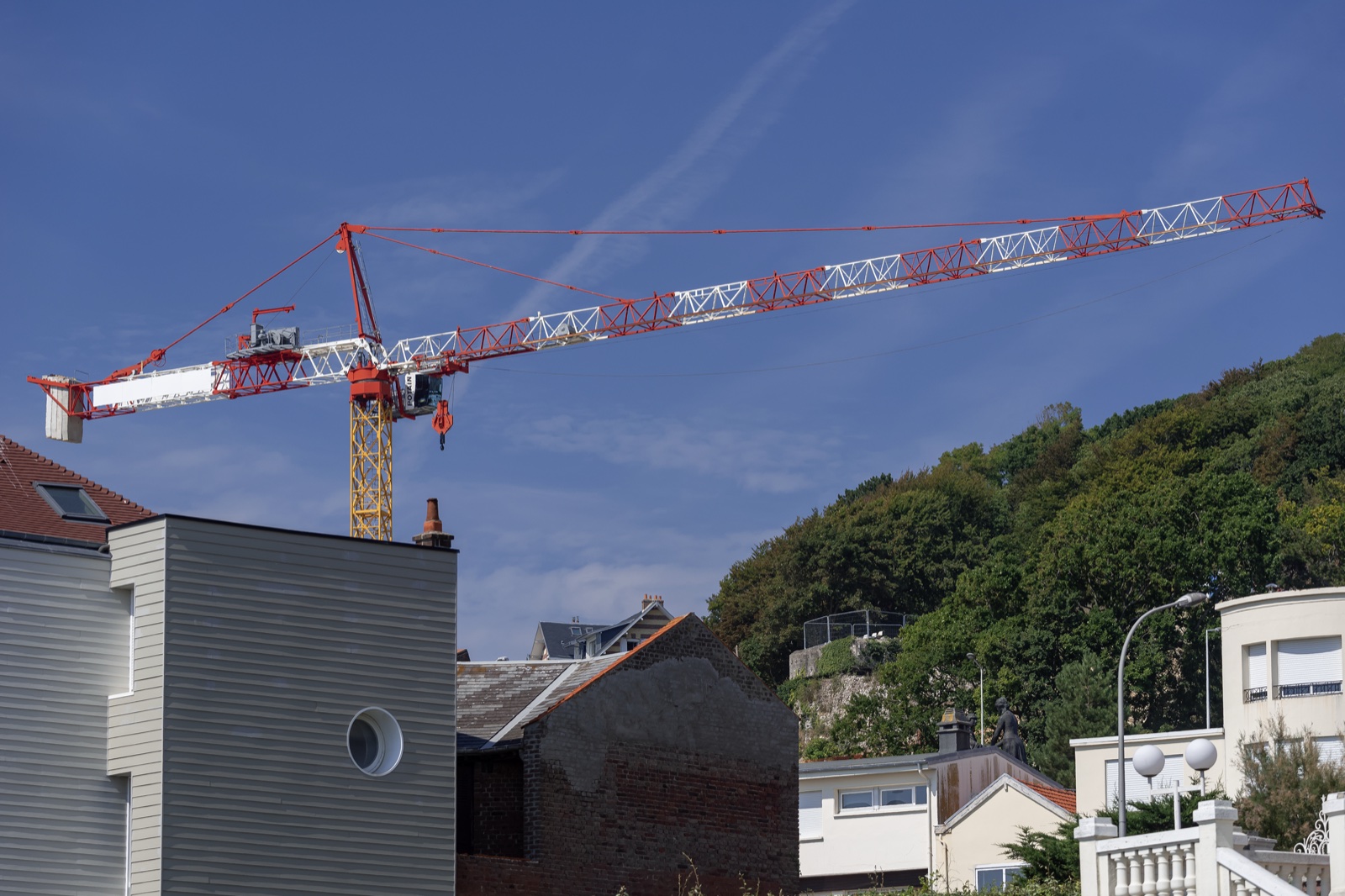
Tower crane on a construction site — full silhouette
Photo: Alexandre Prevot / Wikimedia Commons / CC BY-SA 4.0

The Basics

Understanding
The Machine

To monitor effectively, we track every critical component of the tower crane ecosystem.

Operator's Cabin

The brain of the operation. Where the DRM 3400 HMI sits, giving the operator real-time feedback.

Jib & Trolley

The working arm. We monitor trolley movement (IN/OUT) to ensure safe radius operations.

The Hook

The business end. Load cells measure the weight here instantly to prevent overload conditions.

The Challenge

Three boxes.
Three blind spots.

Most sites bolt three separate vendor systems onto a tower crane — anti-collision, SLI, limit switches — wired together by hope. None of them talk to each other, and none of them talk to you.

Stitched-together safety

Anti-collision from one vendor. SLI from another. Limit switches from a third. When they disagree, the operator overrides them all.

No single audit trail

Each box logs to its own paper book — or nothing at all. After an incident, nobody can reconstruct what the crane was actually doing.

Zero remote visibility

The HSE manager finds out about an overload from a phone call, not a dashboard. By then the lift is already done.

The math is brutal

One incident costs more
than a fleet of DRMs.

We've done the cost arithmetic on tower crane incidents in Indian construction. The numbers don't need a slider.

One major incident

₹2-5crore

Typical all-in cost of a tower crane overload or collapse on an Indian construction site — legal + project delay + insurance + reputation impact.

Stop-work notice

₹65k-2Lper day

What every day of idle crane rental + delay penalties costs after a regulator stop-work order. Average notice runs 5-15 days.

DRM 3400, fully fitted

< 5%of one incident

One device, one install. Pays for itself the first time it stops a near-miss. Across a fleet, before the first quarter is out.

Indicative figures. Compiled from publicly reported tower crane incidents on Indian construction sites and CPWD / MoLE penalty schedules. Project-specific numbers vary; contact us for a TCO comparison against your current safety stack.

Three systems. One device.

Everything a tower crane needs to stay safe.

Anti-collision, Safe Load Indicator, and limit switch monitoring — all enforced on the cabin HMI itself. The cloud is a live, read-only twin so you can see what the device is doing from anywhere.

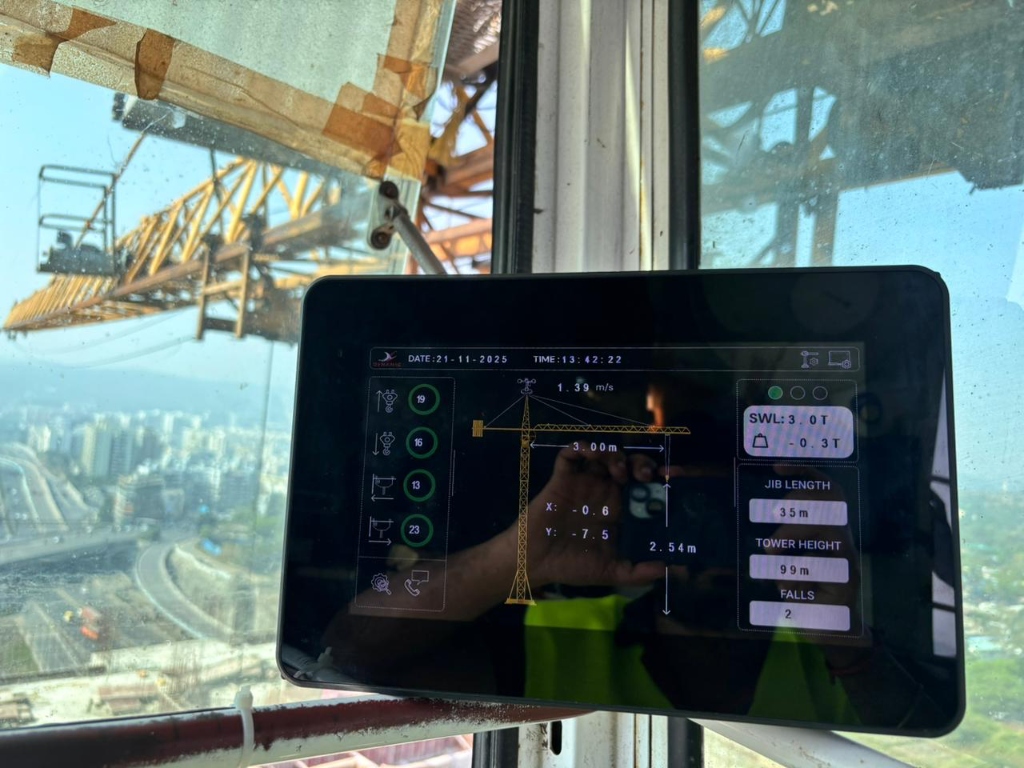
In-Cabin HMI Display

One HMI in the cabin

Anti-collision, SLI, and limit switches — all in one display

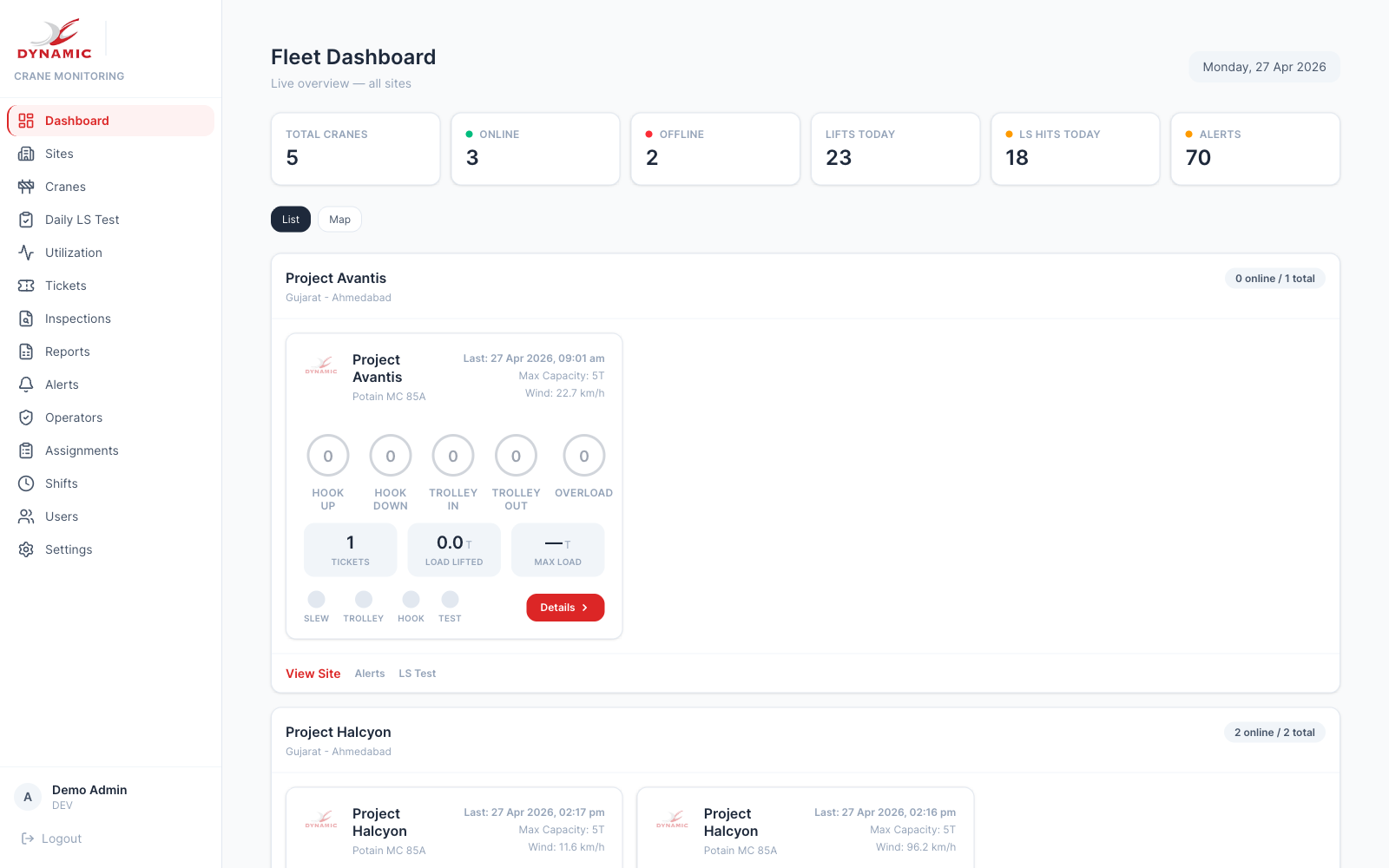
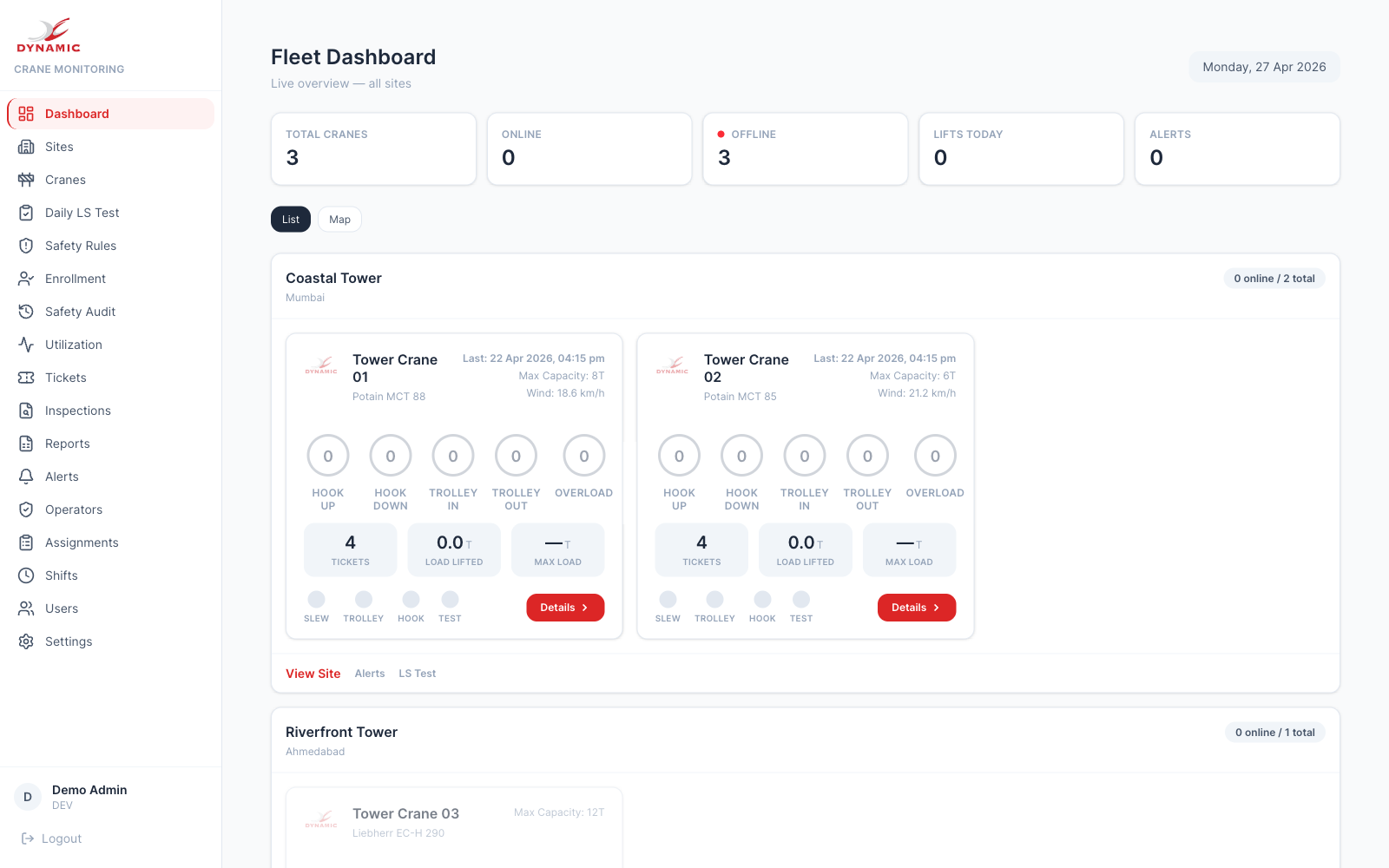
Live Fleet Dashboard — all sites, all cranes, real-time status
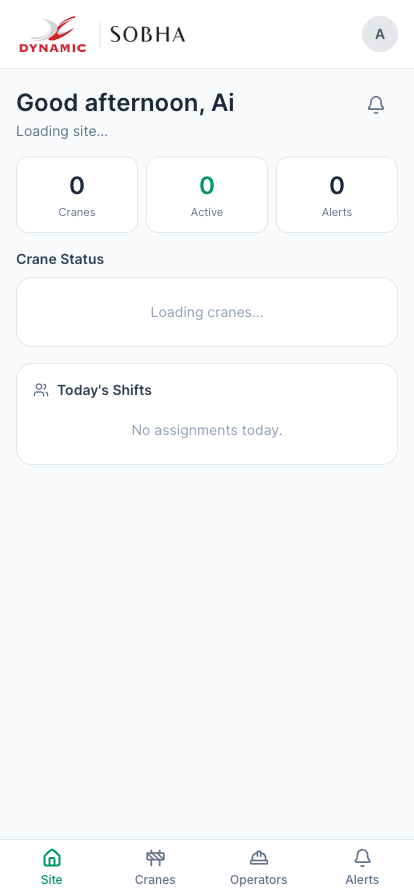
Mobile-first incharge view — site totals, crane status, today's shifts

Anti-Collision

Hook-to-boom clearance, crane-to-crane envelope, and virtual geofences. The cabin HMI brakes the crane before it can hit anything.

Core Safety #1

Safe Load Indicator

Live load weighed at the hook. Capacity curves pushed to the HMI per jib length and radius — visual + audio alarm before overload.

Core Safety #2

Limit Switch Monitoring

Trolley IN/OUT, Hook UP/DOWN, Slew CW/CCW. Every limit hit is logged, timestamped, and replayable from the cloud audit trail.

Core Safety #3

One Rule Engine

Anti-collision, SLI, and limit logic all run on the same DRM 3400-Pro firmware. One device, one set of rules, one audit trail.

Hardware-Enforced

Biometric Operator Auth

Face-recognition login at the cabin HMI. Embeddings never leave the device — DPDPA-compliant by architecture.

DPDPA Ready

Utilization & Audit

Per-motor working hours, lift counts, every rule fire and limit hit — timestamped to the cloud and replayable for 30 days.

Compliance Ready

The Hardware

On the crane.
In the cab.

A three-piece kit deployed in 2–3 days per crane. Engineered for monsoons, construction dust, and 60 m elevations.

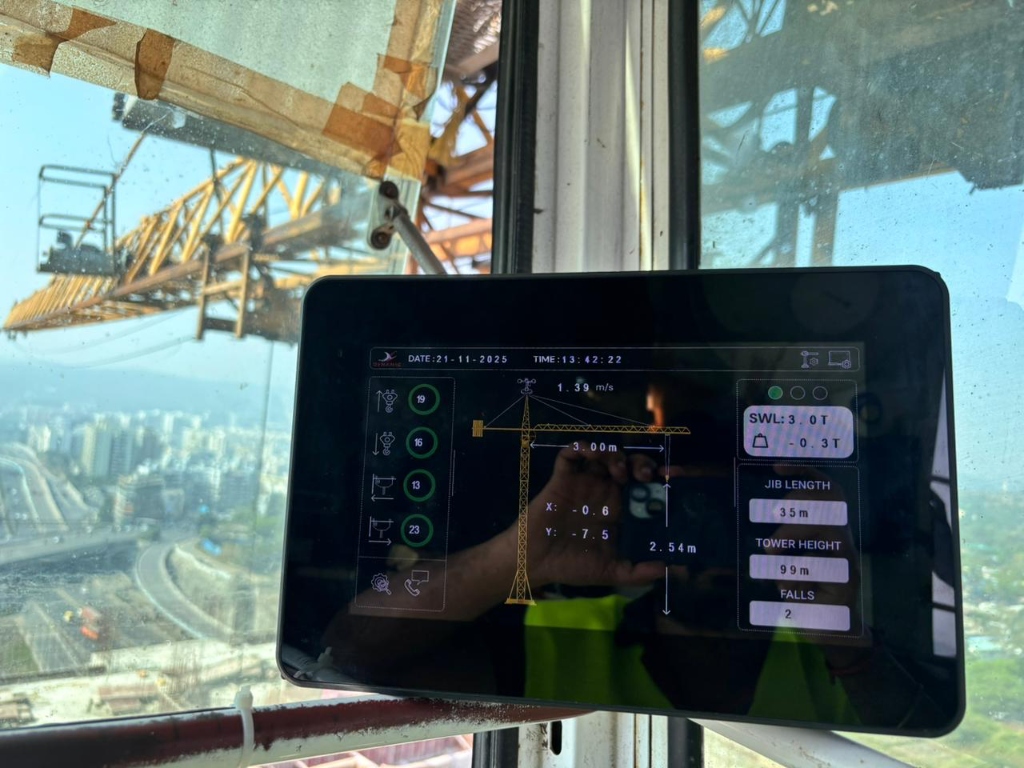
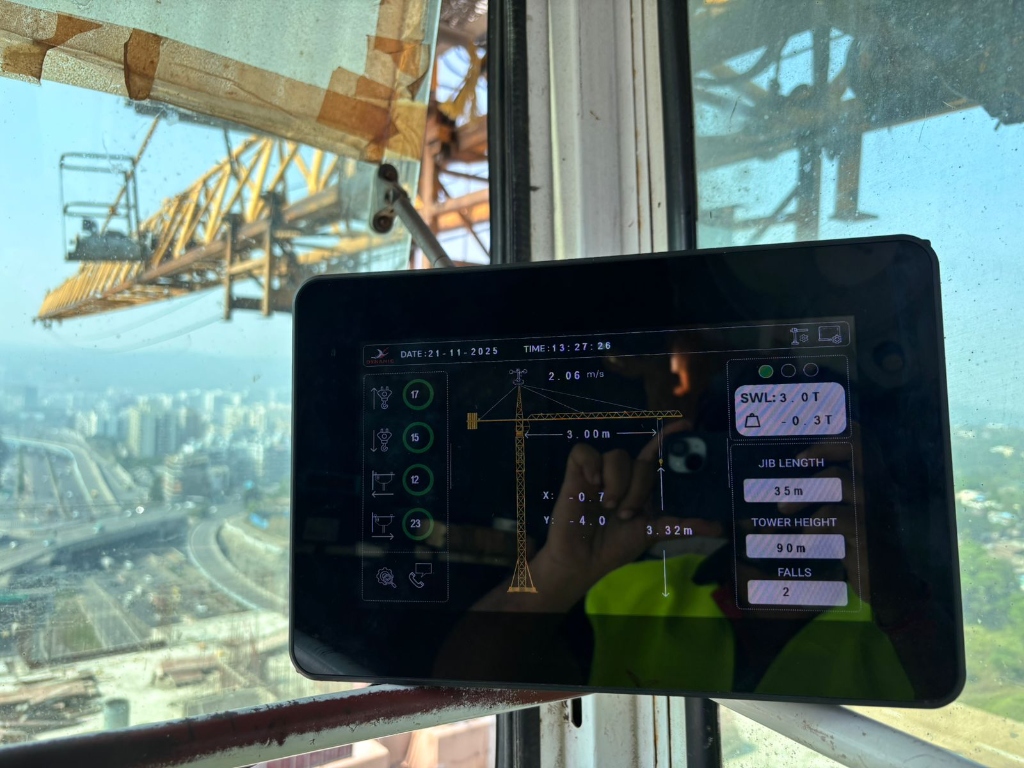
DRM 3400 cabin HMI mounted in a tower-crane operator cab
Live install
Cabin HMI — load, jib, tower-height, anti-collision
DRM 3400-Pro
DRM 3400-Pro

Cabin HMI

Rugged 7" touchscreen mounted in the operator cab. Runs the safety rule engine, biometric face-auth, and on-device calibration. Fail-safe: rules keep firing even if the cloud is offline.

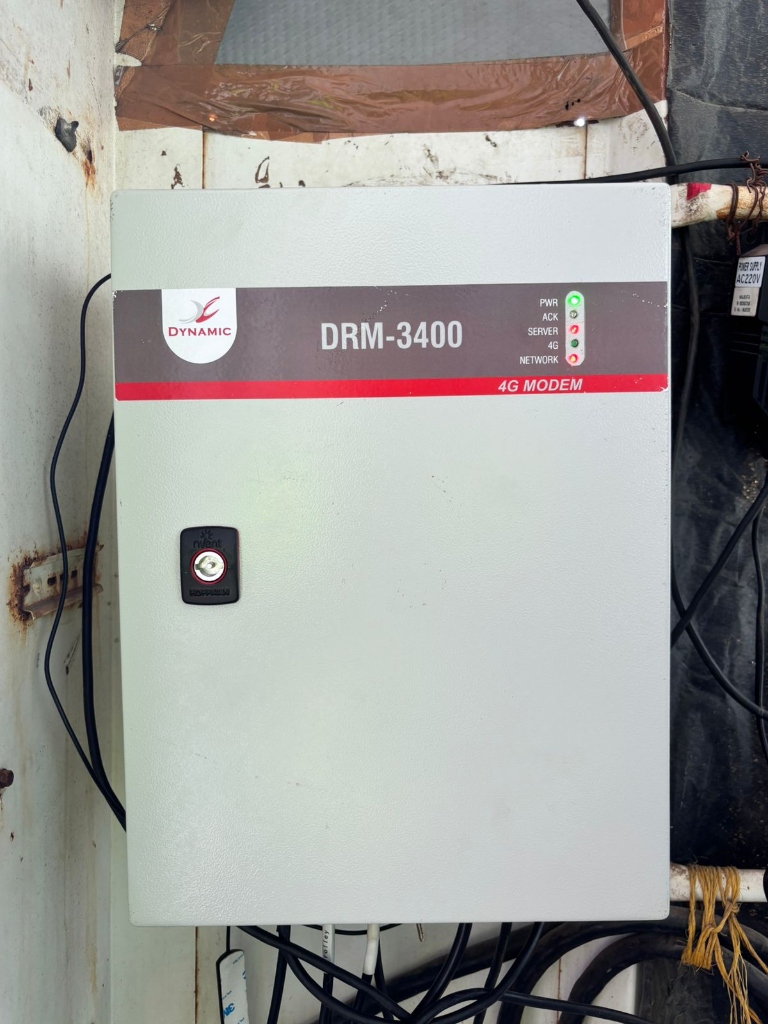
DRM 3400 Gateway
DRM 3400 Gateway

4G Gateway

Industrial enclosure with PWR / ACK / SERVER / 4G / NETWORK status LEDs. Buffers data on-board through outages and auto-syncs on reconnect. AC 220V, lockable.

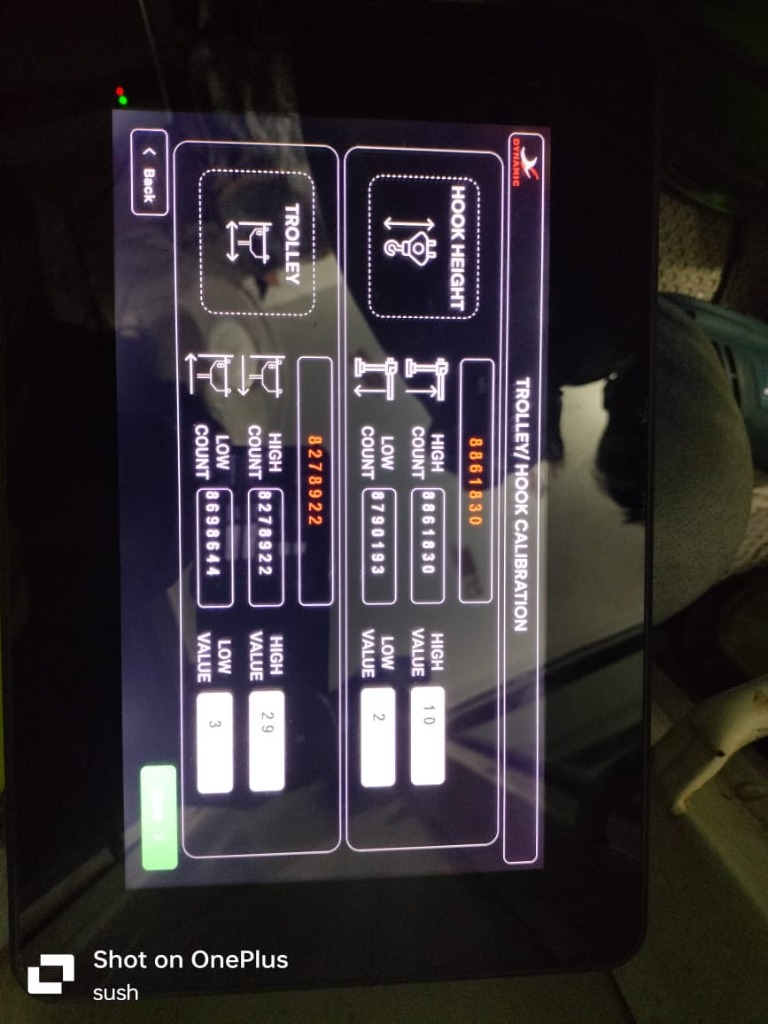
Sensor I/O
Sensor I/O

Calibrated load & position

Hook load cell, trolley and hook encoders, jib-rotation slew sensor. Password-protected on-device calibration with raw count and scaled value side by side.

See what the safety device sees

Every crane.
Reconstructed in 3D.

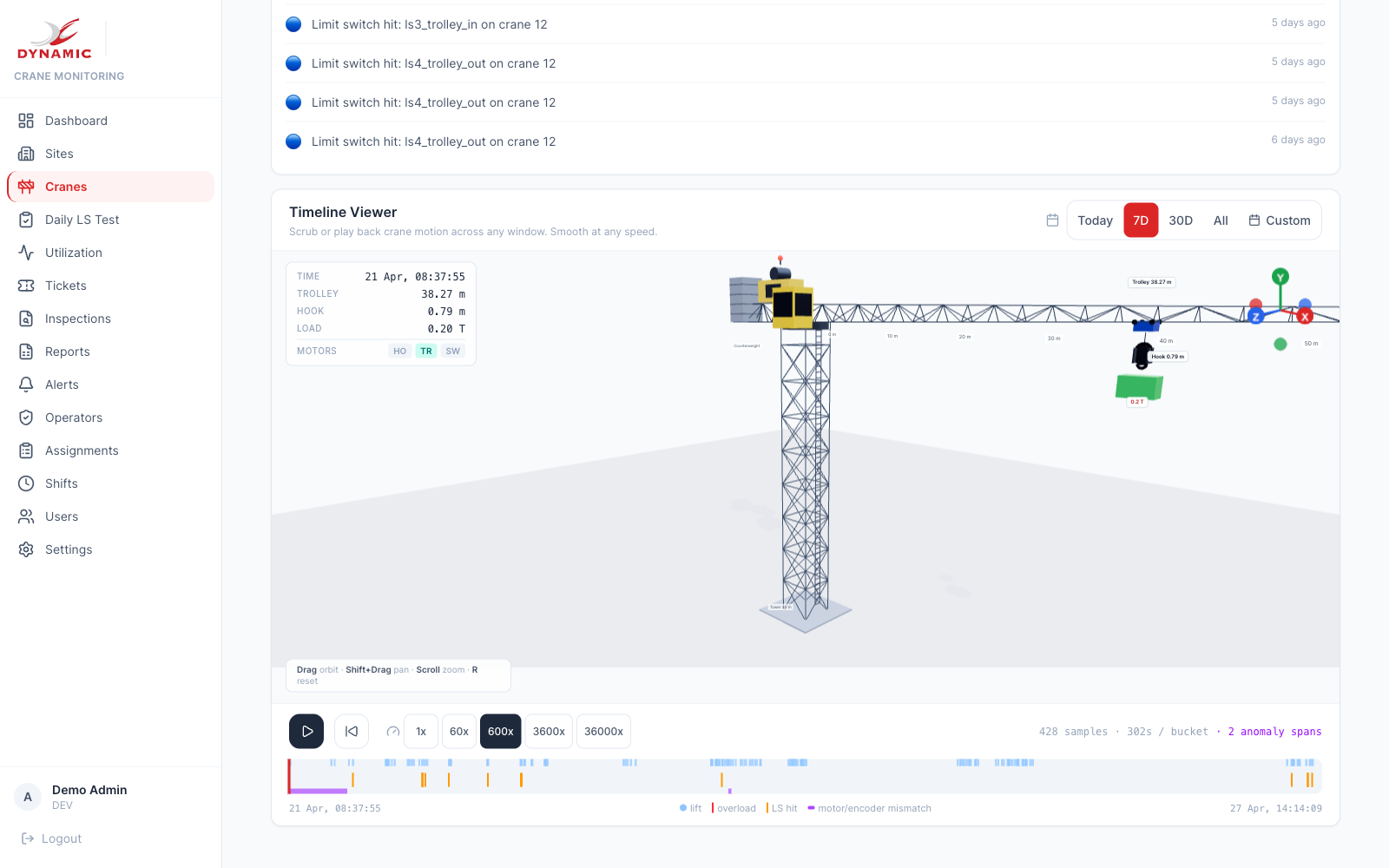
The DRM 3400 enforces anti-collision, load, and limit logic on the crane. The cloud twin lets you watch it happen — live, from any browser, with a scrubbable 30-day timeline of every load, limit hit, and rule fire.

3D digital twin of a tower crane with live trolley, hook, and load — and a 30-day timeline scrubber

Brochure-accurate

Geometry pulled from the official Potain MCT 88 manual. Tower height tracks every climb in metres.

Live telemetry

Trolley, hook, slew, and load update at every MQTT packet. Sub-2-second crane-to-screen.

30-day scrubber

Play back any incident at 1×, 60×, 600×, or 36000×. Anomaly markers on the timeline.

Blender-style controls

Drag to orbit, shift+drag to pan, scroll to zoom. Built for forensic walkthroughs.

Shipped & Live

Built for safety.
Hardened in production.

Real screens from production deployments — running on tower cranes across multiple metro sites today.

Cabin HMI · DRM 3400-Pro

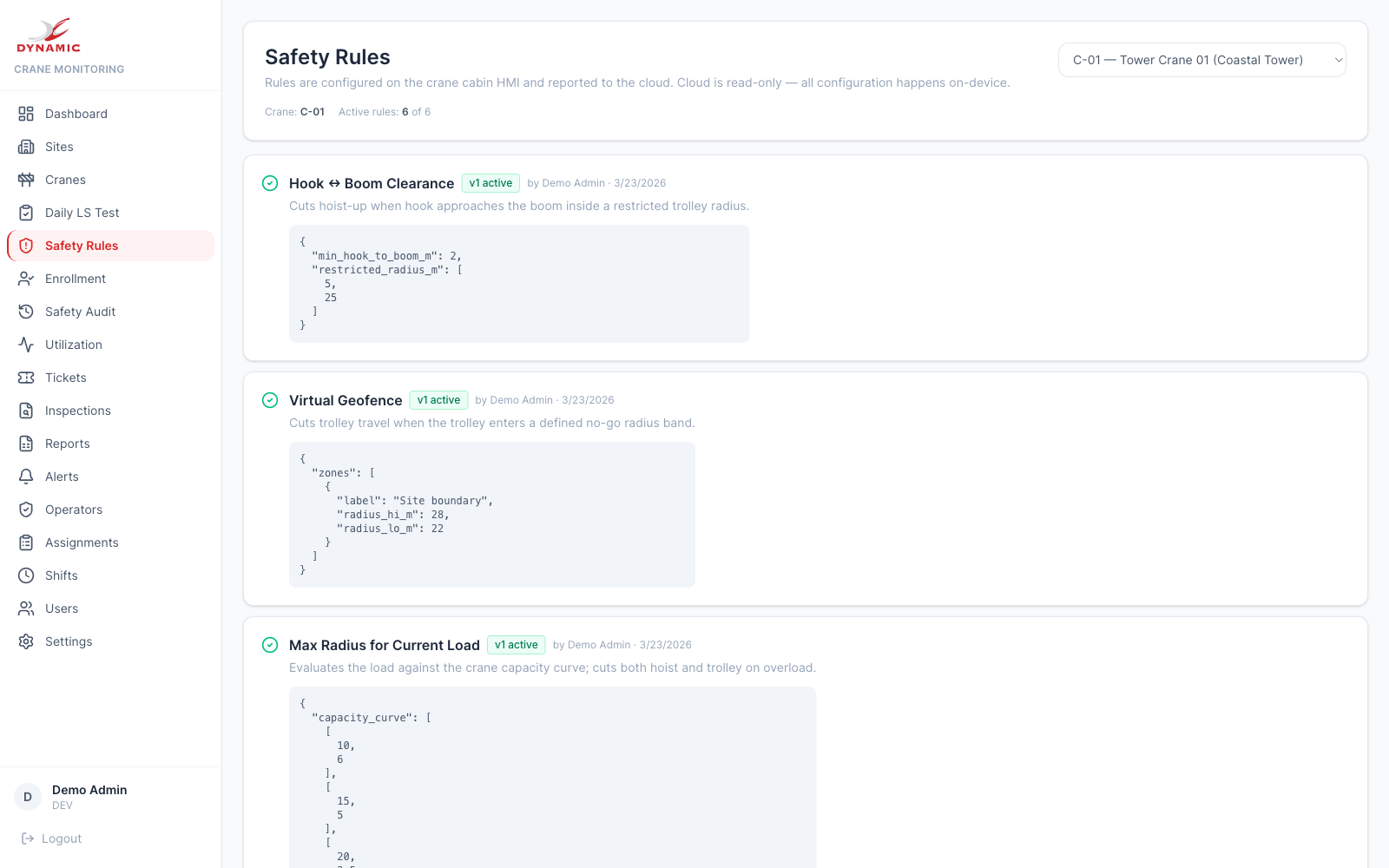
Hardware-pushed safety rules

Hook↔boom clearance, virtual geofence, max-radius capacity curves — versioned per crane and enforced by the cabin HMI. The cloud is read-only.

Hardware-pushed safety rules

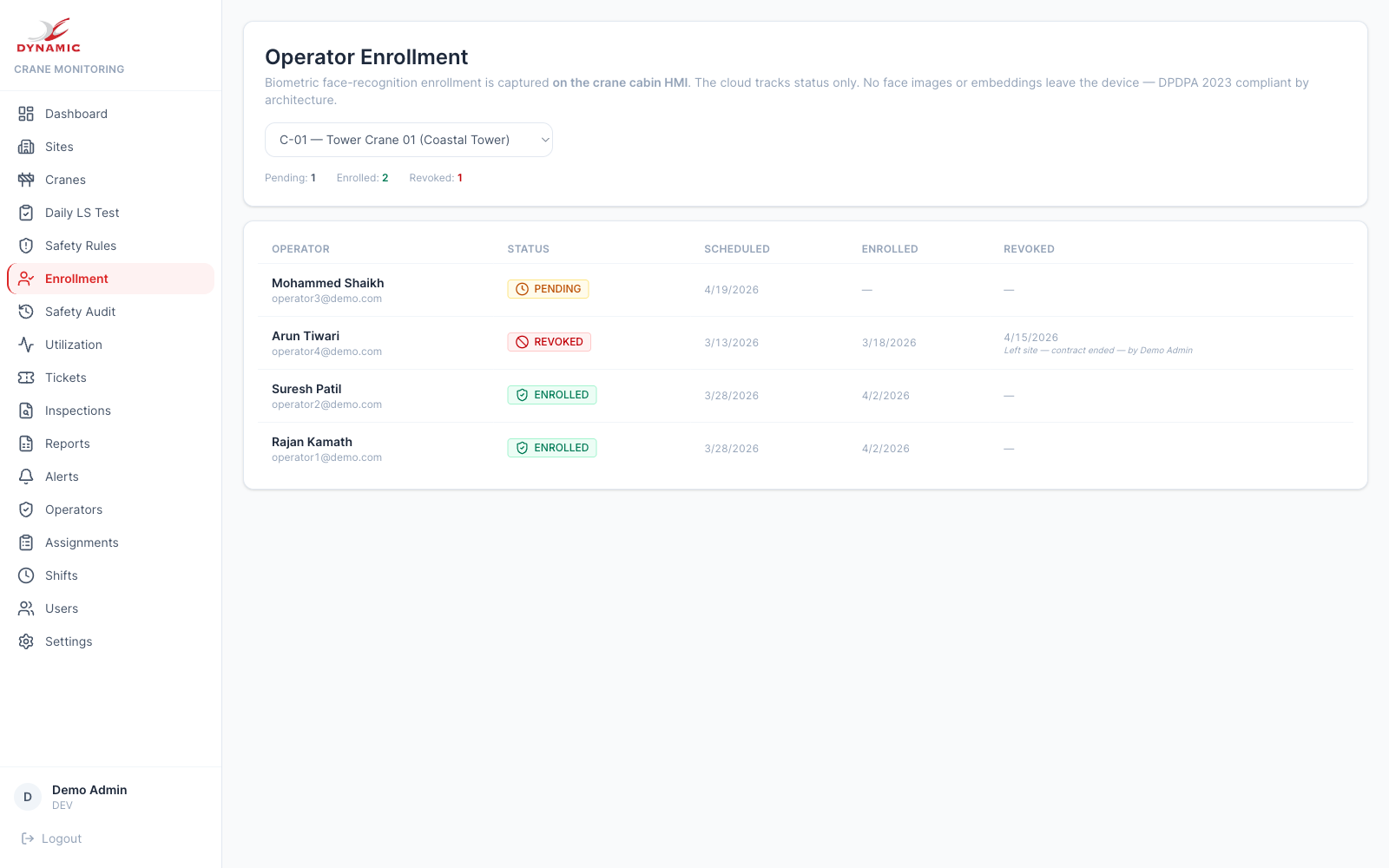
Privacy by design

Biometric operator enrollment

Face-recognition enrollment captured on the crane HMI. The cloud tracks status only — no images or embeddings ever leave the device. DPDPA-compliant by architecture.

Biometric operator enrollment

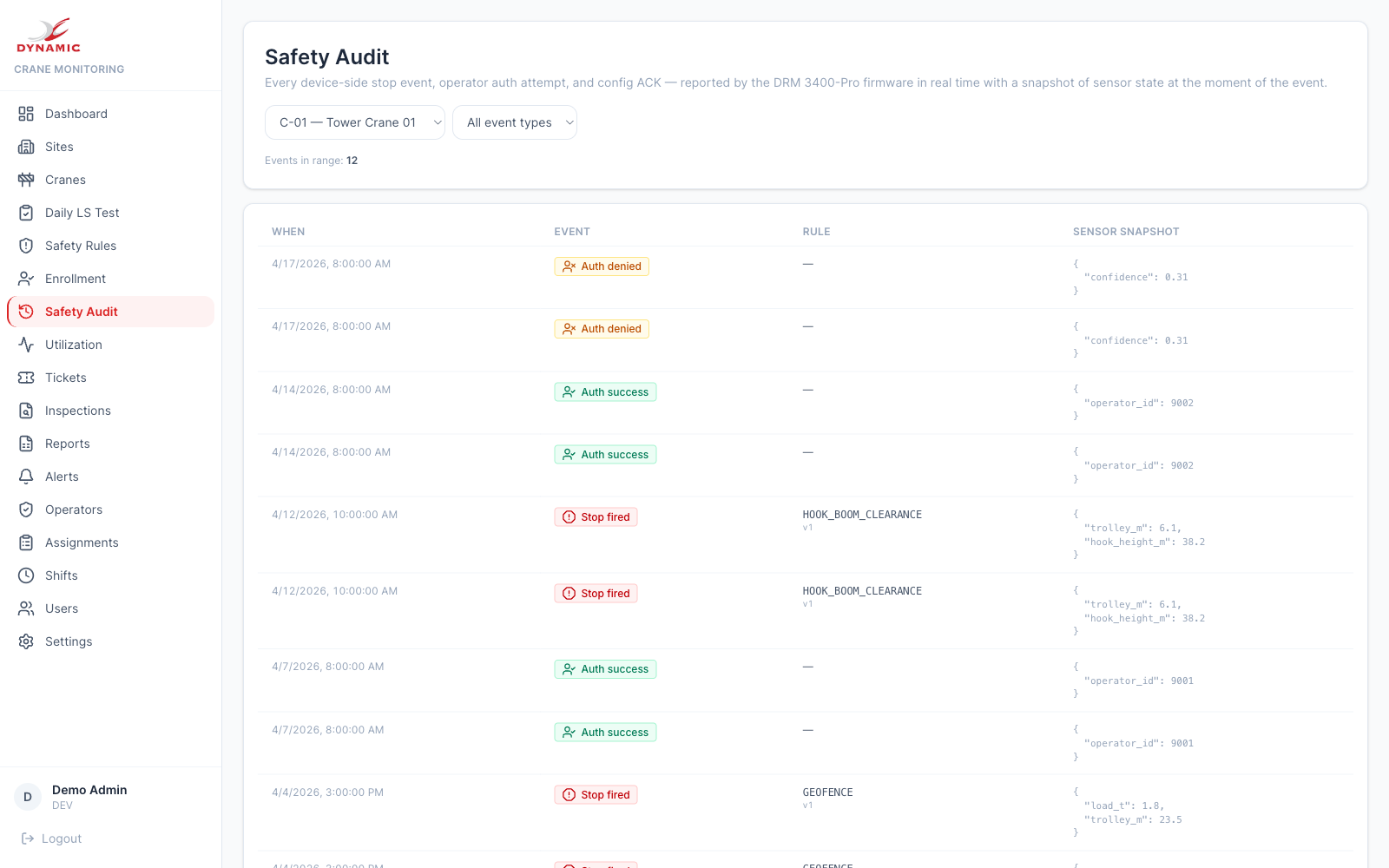
Audit-ready

Tamper-evident safety audit

Every device-side stop event, operator auth attempt, and rule firing — reported in real time with a snapshot of sensor state at the moment of the event.

Tamper-evident safety audit

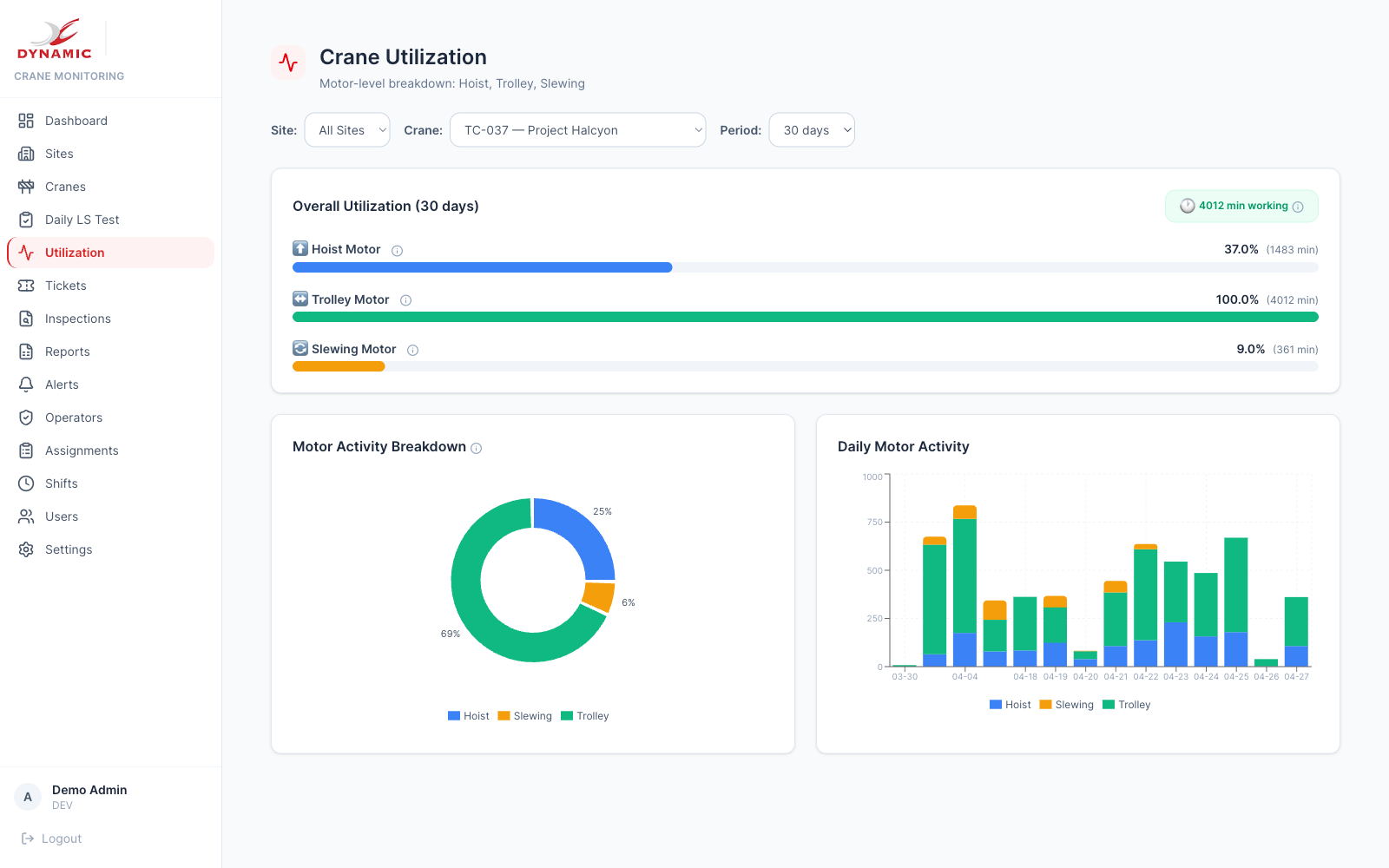
Productivity

Per-motor utilization analytics

Hoist, Trolley, Slewing — broken out separately. Daily activity stack, motor breakdown donut, working-minute totals across any window.

Per-motor utilization analytics

Auto-refreshes 30s

Alerts and notifications

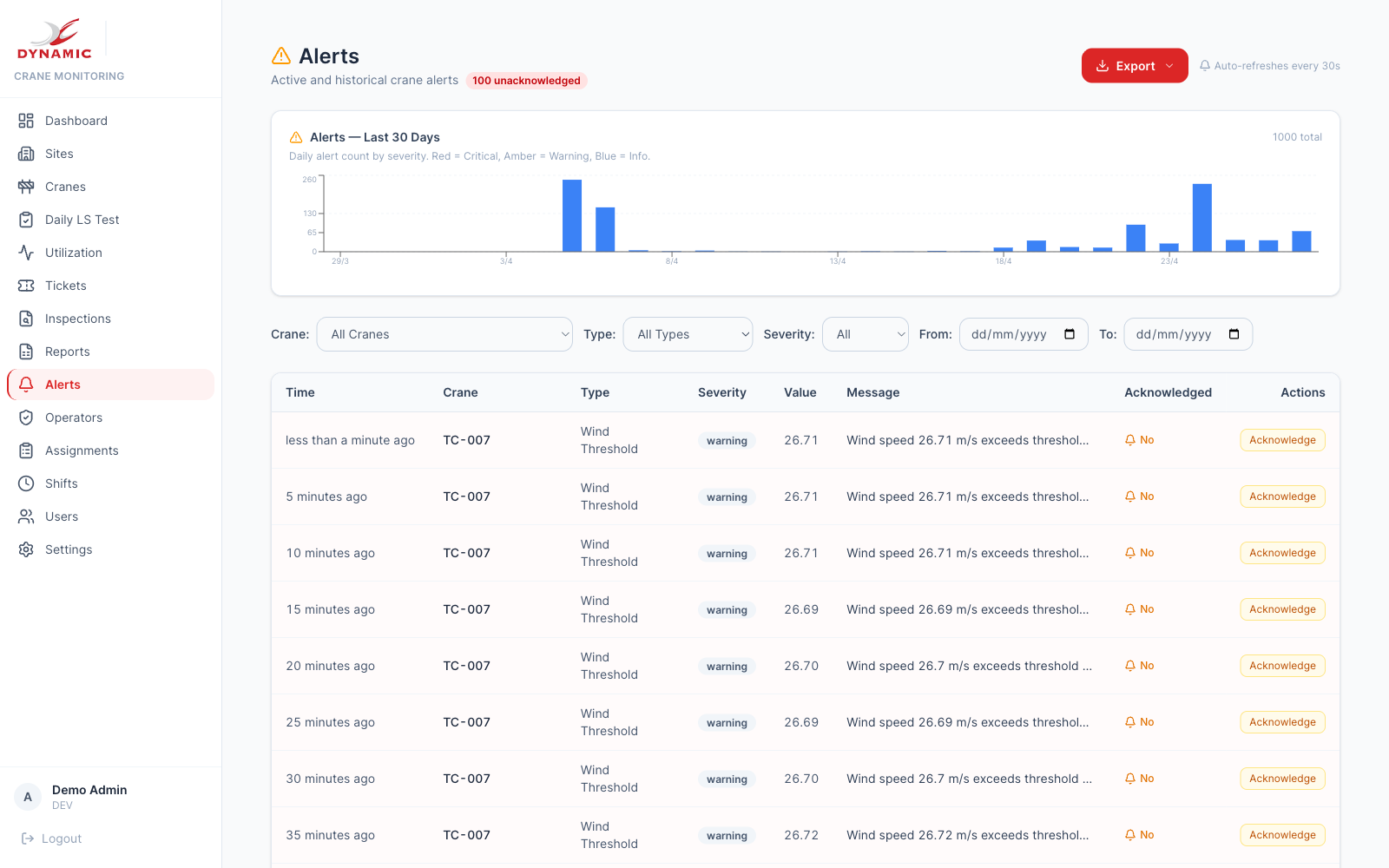
30-day severity histogram. Filter by crane, type, severity, date. One-click acknowledge. Wind-threshold, overload, and offline alerts wired in.

Alerts and notifications

Multi-tenant

Multi-tenant fleet view

Each client gets their own subdomain, branding, MQTT IMEI ACL, and isolated database. One platform, multiple tier-1 builders, full client isolation.

Multi-tenant fleet view

Compliance, by default

Already meets every spec
your project document references.

Non-compliant cranes get stop-work notices. Each day of idle rental and delay penalty is paid in full by the project. DRM 3400 ships meeting the specs your auditor will check first.

IS 4573

Tower Crane Safety

Indian Standard for the design, operation, and inspection of tower cranes — load monitoring, limit switches, and operator authorisation.

BIS Certification

Safety Equipment

Bureau of Indian Standards certification path for crane safety devices and indicators.

Factory Act §28

Lifting Machines

Ministry of Labour & Employment requirements for hoists, lifts, and lifting machines on industrial premises — periodic test logs and registers.

CPWD Vol-1 §15

Construction Hoisting

Central Public Works Department spec on safe load indicators, limit switches, and operator certification for tower cranes on government projects.

NBC Part 7

Construction Mgmt

National Building Code section on construction-site safety management — incident reporting, audit trail, and supervisor responsibility.

DPDPA 2023

Data Protection

Digital Personal Data Protection Act — biometric operator auth must keep face data on-device. DRM 3400 is compliant by architecture.

Questions

Frequently Asked

Is the DRM 3400 really a single device for all three safety functions?
Yes. Anti-collision, Safe Load Indicator, and limit switch monitoring all run on the same DRM 3400-Pro hardware in the cabin. One install, one HMI, one rule engine, one audit trail — instead of three separate vendor boxes wired together.
How does the anti-collision work?
The DRM 3400 enforces hook-to-boom clearance, virtual geofences around no-fly zones, and crane-to-crane envelopes on multi-crane sites. When a violation is imminent, the cabin HMI fires audio-visual alarms and can cut the relevant motor input — all on-device, with no dependence on the network.
How does the Safe Load Indicator work?
A load cell at the hook reports live weight. The DRM 3400 holds the crane's capacity curve (load vs. radius for the installed jib length) and compares the lift to the safe limit in real time. Overload triggers an audio-visual alarm and motor cut at the cabin HMI before damage occurs.
What limit switches does it monitor?
Trolley IN/OUT, Hook UP/DOWN, and Slew CW/CCW. Every limit hit is timestamped and pushed to the cloud audit trail, so you can verify safety mechanisms are still working without climbing the crane.
How does the 3D digital twin fit in?
The twin is the cloud view of what the safety device is doing on the crane. We rebuilt the Potain MCT 88 in 3D from the official brochure. Live MQTT telemetry drives trolley, hook, slew, and load — sub-2-second crane-to-screen. A scrubbable 30-day timeline lets you replay any incident with anomaly markers for overloads, anti-collision events, and limit-switch hits.
Is biometric operator auth privacy-safe?
Yes — DPDPA-compliant by architecture. Face capture and embedding both happen on the crane HMI. No images and no embeddings ever leave the device. The cloud only sees status: pending, enrolled, or revoked.
What happens if we lose network connectivity?
The gateway device has onboard memory that buffers data locally during outages. Safety rules keep running on the HMI regardless of network state. Once connectivity is restored, buffered events auto-sync to the cloud.
Can it be branded for our company?
Yes. The platform is multi-tenant by design. Multiple tier-1 builders already run on their own subdomains, with their own logos, MQTT IMEI ACL, and isolated databases. Adding a new tenant takes a day.

One device.
Complete safety.

Anti-collision. Safe load. Limit switch monitoring.
Everything your tower crane needs — in DRM 3400.

Anti-Collision
Hook · Boom · Geofence
Safe Load
Per-radius Capacity
Limit Switch
Trolley · Hook · Slew